Your toolbox defines your craft. The freedom to choose, evolve, and master your tools is not just a productivity choice—it’s a long-term strategic decision that will put you in control of your craft, for life. Yet another reason to choose open source tools.
The Engineer’s Toolbox: A Strategic, Lifetime Decision

The best engineering companies I have worked with share one common trait: they give their engineers great freedom to choose their toolbox. They find smart ways to balance individual productivity with the overall efficiency of the company.
In contrast, mediocre organizations often hire senior developers but then limit their ability to use the tools they know best. This is a contradiction that hurts their productivity.
Ideally, your toolbox should follow you throughout your entire professional journey. It should evolve and grow with you, ultimately making you increasingly efficient, effective, and adaptable. Your craft depends on your tools, so your toolbox is a fundamental part of your craft, and part of who you are as a professional.
Choosing open-source tools for your toolbox offers you the possibility to make a lifetime strategic decision. This decision means taking control of your tools and how they influence your craft. You get to decide how to integrate them, how to evolve them, and how to adapt them to your specific needs. Reality limits this capacity, but the control is much greater than with proprietary tools.
Thinking Long-Term
I do not use the word “strategic” lightly. Viewing your toolbox this way requires a long-term perspective on your career. It changes how I approach my work and my professional growth.
When you adopt this mindset and look at the high productivity of many long-term open-source developers, you start to realize the effects of this decision, often taken unconsciously years earlier. These effects become very clear.
Many of these engineers are extremely passionate and protective of stable, flexible, and reliable tools that young generations might consider “old school.” They tend to avoid complex proprietary tools. Instead, they prefer simple, flexible open source tools that allow them to integrate them to build smooth and reliable workflows.
These engineers, however, are far from conservative. They constantly test new tools and keep evolving their toolbox. I tend to see them as never fully satisfied, which leads them to constantly look for the next improvement to try out.
Rethinking the “Most Effective Tool for the Job” approach
The common advice of choosing the “best effective tool for the job”, often sold as a “pragmatic” or “cost effective”, leads to a focus on short-term goals. It ignores significant mid- and long-term costs like integration friction, adaptability constraints, time to perform common tasks, and common tasks lead times, parallelization,…
While there is value in repeatedly switching to the “new kid in town” and working hard to become as effective as possible, the highest value rates come from those, in my experience, who maintain a consistent, evolving toolbox that they truly master, hand-in-hand with their craft. Engineers who think long-term about their open-source toolbox shine brightest when faced with complex, challenging problems that truly test their craft. They also become more resilient to changes in their environment (assignment, team, focus, job, industry, etc).
Lessons from the trenches
These ideas reflect a crucial lesson I learned during my years managing software engineers: those who think long-term about their toolbox consistently outperform over time those who don’t.
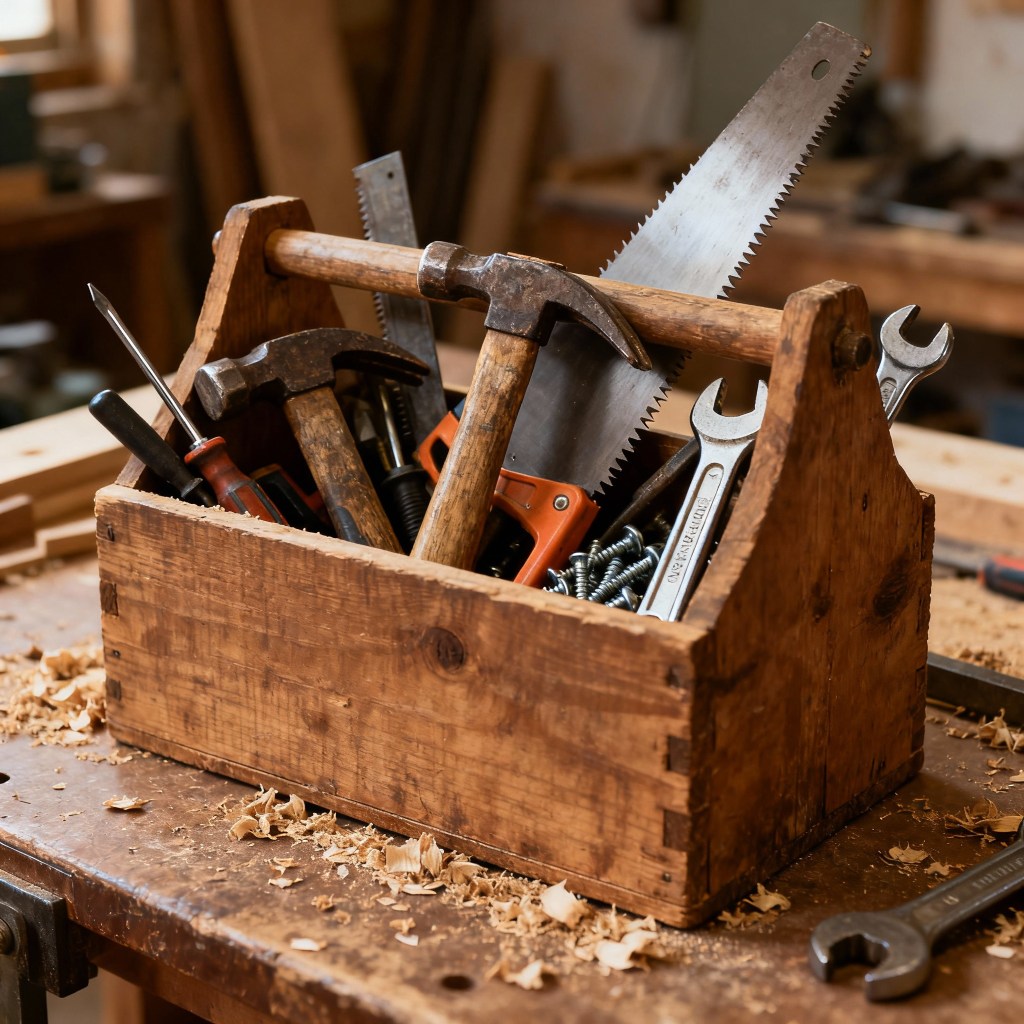
Sadly, as a consultant, using customer tools is often a requirement, and my own toolbox has become a mess. Working within different customer corporate environments imposes strong limitations on the freedom I have to decide about my tools. My productivity and efficiency suffer. It is true though that these goals are not as essential as a consultant as they were as a manager.
Choosing “the best tool for the job” might seem pragmatic, but it often reflects a short-term mindset. It ignores the long-term costs of integration, learning, and productivity. When needs change, so do tools, and much of the investment—both corporate and individual—is lost.
Summary
Our tools shape our craft as much as our experience does. Choosing open source tools and building a consistent, evolving toolbox is not a matter of preference. It’s a long-term strategic choice. It empowers engineers to own their productivity, maintain flexibility, and stay in control of their craft throughout their professional journey.
If you’ve read this far, I hope you found a new reason to value open-source tools.
Do you see things differently? Let me know.
The article has been polished using AI Code assistants. Both images generated by IA too.
 toscalix