Today I introduce Tagoross Circle of Practice: a safe harbor digital environment for professionals who want to turn open source into a strategy topic at their organizations. This is the story of why I created it and where it stands.
Why I created Tagoross
Three ideas led me to Tagoross:
- A subscription-based service of my own. I have helped several companies design subscription-based offerings, and I wanted to create one myself for years. Consulting has busy periods and quiet ones. I wanted something to build during the quiet ones, with limited pressure.
- A safe harbor forum. There is room for forums where professionals can discuss the business aspects of open source without the challenges of open forums. This matters most for those who hold great responsibilities within their organizations and are learning about open source.
- Coaching. Supporting decision-makers in their open source journey is the activity I have learnt the most from.
There was also a trigger. During 2025, an AI service provided me with a text based on one of my blog posts, without giving credit. I understood the disruption first hand. The old strategy for open source business consultants, showcasing our knowledge in the open by creating content, is challenged.
In March 2026, I decided to go for it. From there, I arrived at what I introduce publicly today:
Tagoross Circle of Practice (Tagoross CoP).
What Tagoross is
Tagoross is what I call a circle, to avoid using the word community, which refers to collaboration in the open. This Circle is for those moving their organizations from treating open source as reactive risk management to treating it as a proactive strategy topic (open source as strategy).
In Tagoross, they will be able to improve their skills and capabilities by collaborating with peers as well as open source experts. They will also get professional support. All this happens in a safe harbor environment.
Tagoross is an online environment structured in three layers:
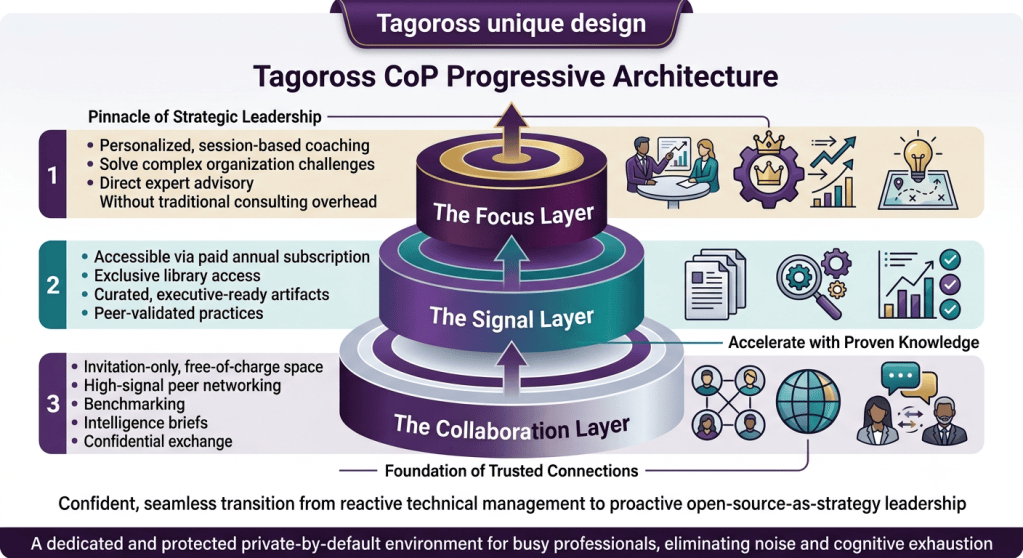
- The Collaboration Layer: an invitation-only, vetted, peer environment, where professionals and open source experts can discuss and collaborate on topics that are valuable to them. It gives access to features like weekly Intelligence Briefs, group sessions on a specific topic, 1:1 interactions and others.
- The Signal Layer: a subscription-based environment for those who want a more use-case driven collaboration. It is supported by me, initially, and designed to uplift the skills and capabilities of subscribers in the core topic, open source as strategy. This layer includes features like the Artifact Library, a growing repository of cocreated content, and specific sessions tailored to the needs of subscribers, instead of topic-oriented ones.
- The Focus Layer: a coaching-oriented service layer. Subscribers have access to specific support from independent consultants in different areas related to open source.
Where Tagoross is today
The alpha phase of Tagoross was launched on 25 June 2026. It included the Collaboration Layer only, with very limited features and a small number of open source professionals. The beta phase started on 11 September 2026. The goal of this stage is to scale up the Collaboration Layer, while increasing the interactions with Tagoross Members.
I would like to arrive at the Christmas period with the Signal and Focus layers up and running. We’ll see because, after a quarter fully focused on Tagoross to launch it, I will go back to consulting activities, giving Tagoross only part of my time. There is no hurry though. Tagoross is designed as a long run, not a sprint.
First deliverable
The first Tagoross deliverable is currently under its last review cycle: the “AI Openness: Terminology and Definitions Guide”.
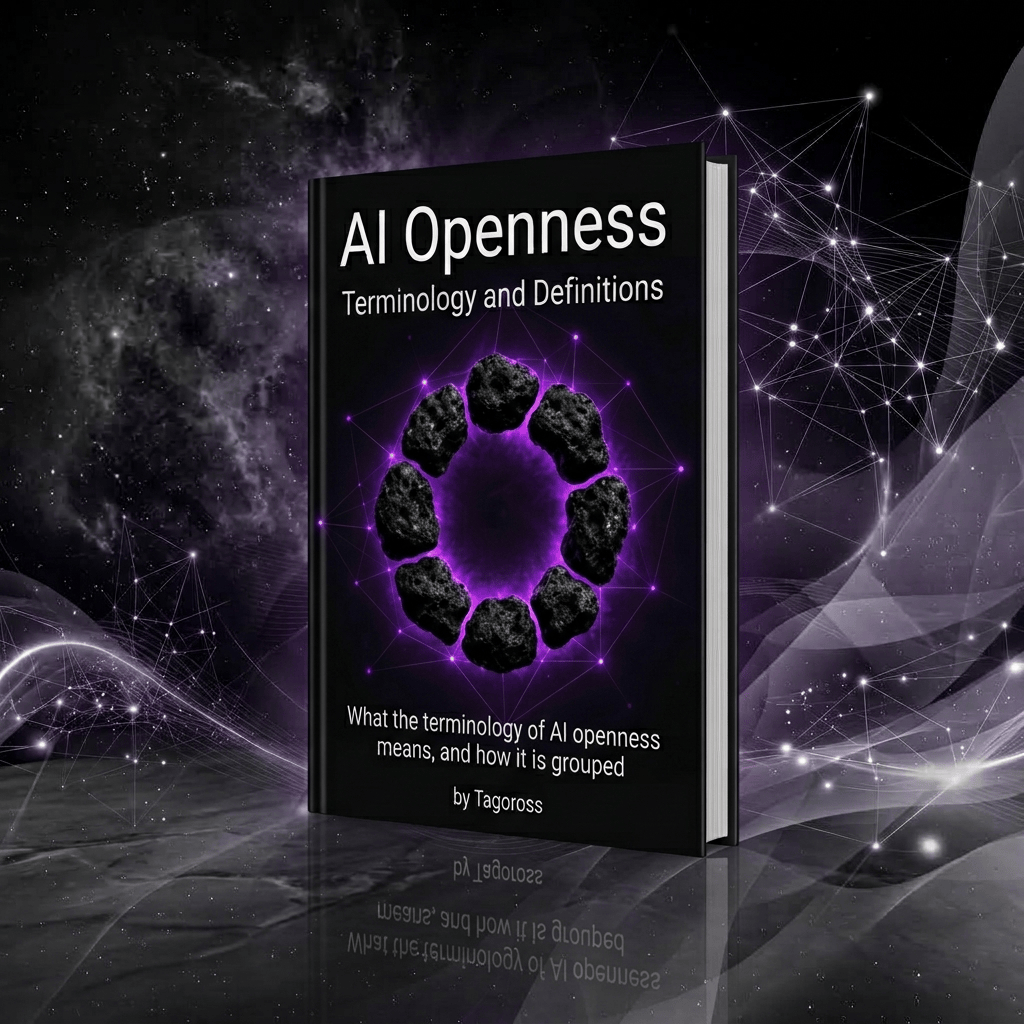
It is the first of a series of resources for professionals overwhelmed by the current open-weight and open source AI landscape. The series is meant to help them understand the core terms related to AI openness. Based on those terms, they will be able to classify AI models in a simple way to, among other things, better understand vendor lock-in risks or investment opportunities.
Once this review process is over, Tagoross will release the Guide as open source. Some of the additional packages of the series will follow, also as open source. Others will remain for Tagoross Members only.
The goal is to maintain and evolve these resources over time, so they they address Tagoross Members needs within their organizations.
What comes next
In future posts, I will describe what I mean by safe harbor, what kind of activities we are developing, what the current plans are for the next few months, and other details.
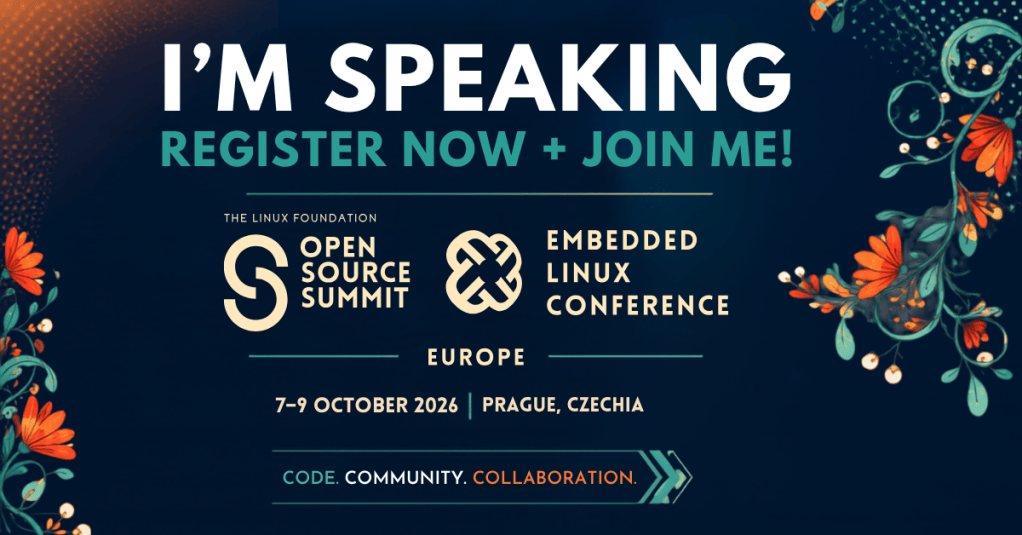
I am writing this post from Prague. I will be attending Open Source Summit Europe OSS EU 2026 where I am part of the panel “Open Source in a Software Defined World“, that takes place on Wednesday October 7, from 17:25 to 18:05 CEST
If you are curious about Tagoross CoP, do not hesitate to approach me anytime at the event. I will be more than happy to answer any question. Oh, and ask me about the first Tagoross deliverable, The AI Openness: Terminology and Definitions guide, if you are interested in reviewing it before it gets released. I will put you in the loop.

